
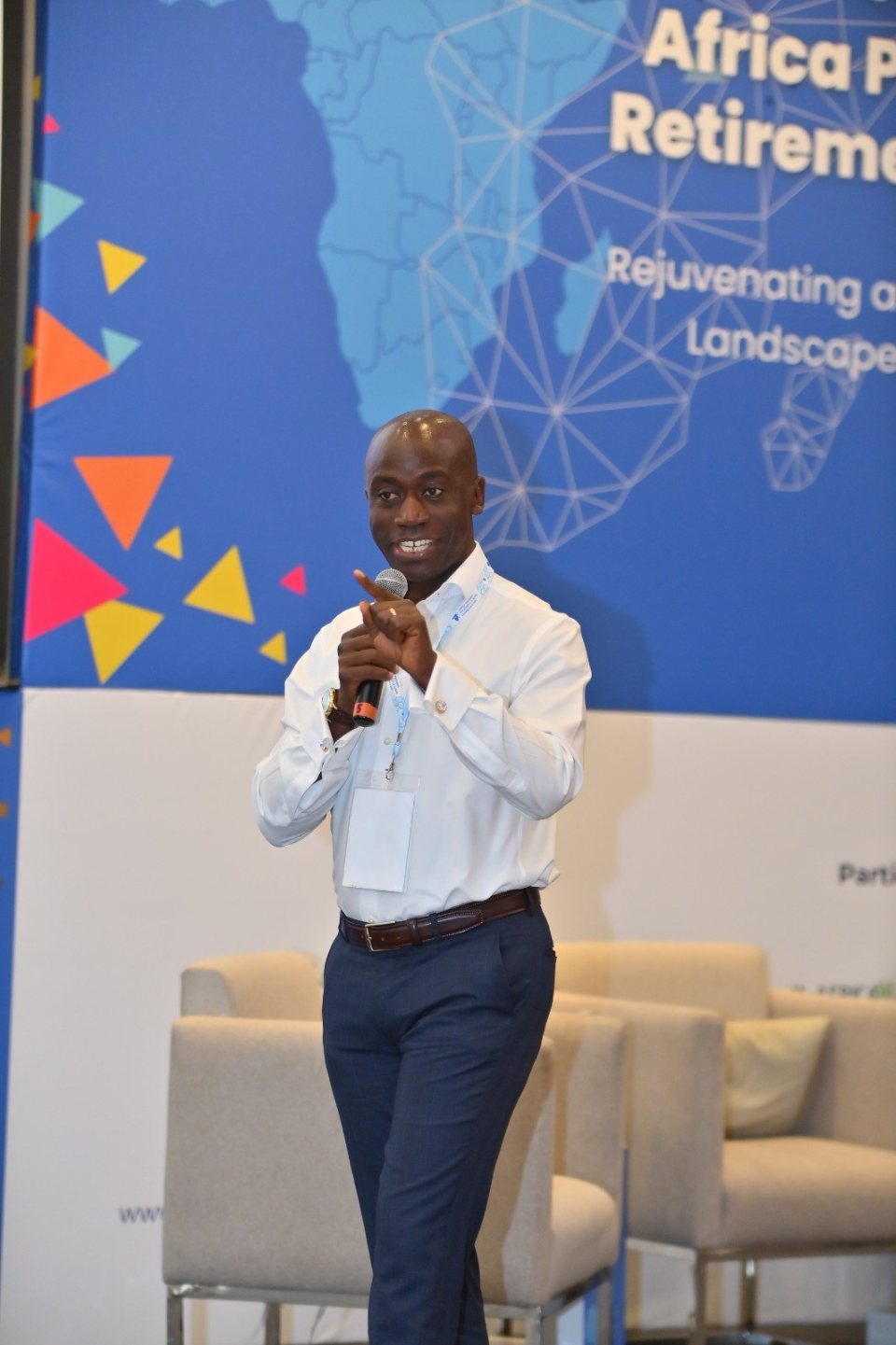
Reflections on my address at the 6th Annual Africa Pension Funds & Retirement Summit, Casablanca, Morocco, 2025.
What would African pension products look like if we began with the lives of the people we want to serve? That question shaped my presentation in Casablanca on design thinking and locally relevant investment products. My argument was straightforward: expanding participation requires us to understand how people earn, whom they trust, what they are saving for and how they imagine their later years.
A pension product can be technically sound and still feel distant from a member’s daily reality. For someone whose income arrives irregularly, a fixed monthly contribution may be difficult to sustain. For someone balancing household needs with a small business, a promise several decades away must compete with urgent priorities today. These are design questions that deserve as much attention as the investment proposition.
The savings culture we should learn from
I began with an African expedition through familiar community savings arrangements: susu, esusu, osusu and tontines in West Africa; stokvels in Southern Africa; chamas in East Africa; and daret and jama’iyya in North Africa. Their structures vary, but they offer a useful starting point for understanding participation.
The rotating savings example in my presentation was deliberately simple. Ten people each contribute 5,000 units of currency, creating a pool of 50,000. One member receives that pool, and the cycle continues until everyone has had a turn. The attraction extends beyond the money. Participants understand the arrangement, know the people involved and can connect their contributions to a tangible purpose.
These arrangements reveal habits of saving, mutual accountability and trust on which formal pension design can build. They should not be confused with regulated retirement provision, and their limitations matter. The opportunity is to preserve what makes participation meaningful while adding the safeguards, investment discipline and administration needed for long term retirement saving.
Before asking why people have not joined our schemes, we should examine what makes the financial arrangements they already use worth joining.
Design around real lives and changing aspirations
My presentation also explored differences in retirement expectations across generations. Some people associate retirement with leaving employment and enjoying greater security. Others envisage entrepreneurship, part time work or the freedom to choose how they spend their time. Those perspectives are useful prompts for research, rather than fixed descriptions of everyone born within a particular period.
Age alone cannot tell us what a member needs. Income patterns, dependants, health, access to technology and personal goals can be equally important. A salaried professional, a market trader and a gig worker may all seek security in later life while needing different routes towards it.
This is why retirement psychology belongs in product development. In Casablanca, I used the idea of “re-tyre-ment”: preparing for another stage of the journey. Helping members picture a purposeful future can make retirement planning more personally relevant. The conversation should connect accumulated savings to the life those savings are intended to support.
Use design thinking to test our assumptions
The practical method I proposed was design thinking. Its value lies in bringing members into the development process early enough to change the solution.
Empathise. Listen to prospective members and observe their financial lives. Explore what happens when income falls, how household decisions are made and what creates or undermines trust. Interviews and journey mapping should expose realities that a product specification may overlook.
Define. Translate those observations into a clear problem. “We need more informal sector members” describes an institutional ambition. “A trader needs a manageable way to save for later life despite unpredictable weekly income” gives a team a specific challenge to solve.
Ideate. Generate alternatives before committing to one model. Consider contribution patterns, communication, service channels and the role of trusted groups. Assess ideas against the member’s needs and the scheme’s ability to administer them responsibly.
Prototype and test. Put a simple version in front of intended users. It might be an enrolment journey, a sample statement or an illustration of how contributions could work. Discover what people misunderstand and what they would actually use. Revise the design before investing heavily in a full rollout.
The discipline is to remain willing to change direction. A positive reaction to a presentation is not the same as a product that people can understand, use and sustain.
Turn member insight into practical products
I brought five proposals to the discussion: goal oriented pension products, better use of data and artificial intelligence, investment choices aligned with members’ circumstances, impact investment products and the integration of retirement psychology. Together, they form an agenda for testing how pension provision can become more relevant.
Goal oriented products would help members connect contributions with a future they can describe. A member who understands the purpose of saving and can see progress towards it has a clearer basis for making decisions. For workers with uneven earnings, product development should explore contribution flexibility while keeping the retirement objective visible.
Investment choices should also be understandable. My slides identified aggressive, moderate and conservative approaches. Those labels need explanation in terms of potential losses, investment horizons and the member’s ability to bear risk. Offering choice is useful only when people have enough support to make sense of it.
Data can help bring these elements together. I proposed aggregation across the pension ecosystem, performance analytics, projection tools and better organisational visibility. Used well, these capabilities could help providers identify interruptions in contributions, improve service and give members clearer information. Artificial intelligence should serve those defined purposes. Its usefulness depends on reliable data and accountable decisions.
Explore investments that members can relate to
The Solar Pension Fund was a concept I used to stimulate thinking about the relationship between retirement investment and local development. Could an appropriately structured investment support energy provision during members’ working lives while contributing towards income in retirement?
The same design conversation can explore opportunities linked to local economies, including cocoa in Ghana, coffee in Kenya, film in Nigeria and tourism in Morocco. These examples invite investigation; they are not recommendations to invest pension assets in particular projects or sectors.
A compelling development story does not establish investment suitability. Any such proposition would need rigorous assessment of risk, expected returns, liquidity, governance, diversification and applicable investment rules. The concept must earn its place in a portfolio on terms that protect members’ interests.
For me, the wider question is whether we can make the relationship between pension saving, productive investment and people’s everyday lives more understandable. Relevance can strengthen engagement, provided it is supported by sound investment decisions.
Make innovation a leadership responsibility
For trustees and pension executives, the challenge is to create space for member research and disciplined experimentation. Ask whose needs the existing product serves well, whose needs remain poorly understood and what evidence would justify a change.
For administrators and technology providers, the task is to turn those insights into services that work consistently. Flexible product ideas require accurate records, reliable contribution processing, clear communication and accessible support. Technology decisions should follow an understanding of the member journey and the operational demands behind it.
A practical starting point is to select one underserved group, investigate its needs and test one carefully defined proposition. Evaluate comprehension, participation and sustained use alongside operational feasibility. Let the findings determine whether to refine, expand or stop the initiative.
My Casablanca message remains a challenge to our starting assumptions. Africa’s existing savings practices deserve serious attention, and its members deserve products designed around their circumstances. We should bring the same curiosity to understanding a trader’s financial life that we bring to developing an investment strategy. That is where more relevant pension innovation can begin.
Continue the conversation
I welcome opportunities to engage pension boards, regulators, industry associations and leadership teams on design thinking, pension inclusion and technology for better member outcomes. A keynote can open the conversation; a focused workshop can help teams turn it into questions, prototypes and actions for their own institutions.
About the author
Timothy Mukoba is Co founder and Chief Commercial Officer of Systech Limited. His speaking work explores pension administration, technology and the design of retirement solutions relevant to African markets.
Source note
Adapted from Timothy Mukoba’s presentation, Design Thinking — Creating Locally Relevant Investment Products for Impact, delivered at the 6th Annual Africa Pension Funds & Retirement Summit in 2025, and Systech’s event article published on 16 May 2025. The proposals discussed are concepts from the presentation, developed here into a practical leadership agenda.


